International partnerships between IET TSUC and Laurea University of AS

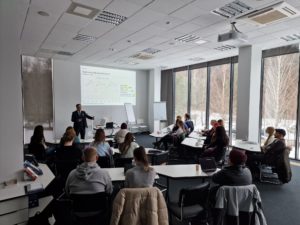
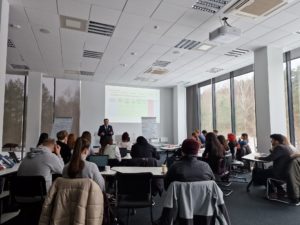
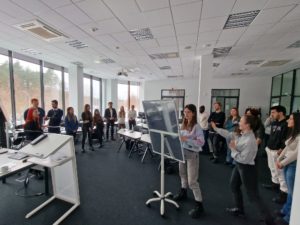
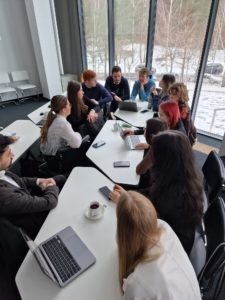
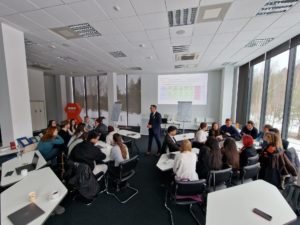
On the second day of the meeting, a personal conversation took place between the staff and masters degrees of IET, who were selected under the Erasmus + program at Laurea University of AS, Finland.

Deputy Director for Science and International Relations, docent Mirpochoev D.A. and Head of the  Science and Innovation Department, docent Kamolov Farukh discussed the differences between scientific internationalization, practical classes and lectures, independent work of students of the University of Laurea and IET TSUC.

Then the head of the Foreign Languages Department, docent Ismoilova Mutriba spoke about the linguistic support of intercultural relations and stated that she wants to get to know foreign students closely and understand their opinion during her mobility. Mentioned: “Each language is a whole world. Language is not only a subject of study, but also the living soul of people, joy, pain, memory, their treasure”.

Senior lecturer of the Foreign Languages Department  Sidiqova Gulsara was asked about the differences between the education systems of our Institute and Laurea University.

Also, the chief specialist in career and internship, docent Bukhodirov Khabibullo informed about the process of the internships of IET’s students and asked how the internships are held and conducting lectures in practice in the form of an internship at Laurea University of AS.

Master’s students of IET who will continue their mobility at Laurea University of AS, Finland in 2023-2024 introduced themselves and expressed their willingness to study abroad. At the end, with the participation of Mr. Conrad Lyaruu and Mr. Ilkka Kurkela our Master’s students were awarded with certificates of scholarship.

Guests Visit to the IET TSUC from Laurea University, Finland

International partnerships between universities are beneficial to all, from the staff and students to the world as a whole!

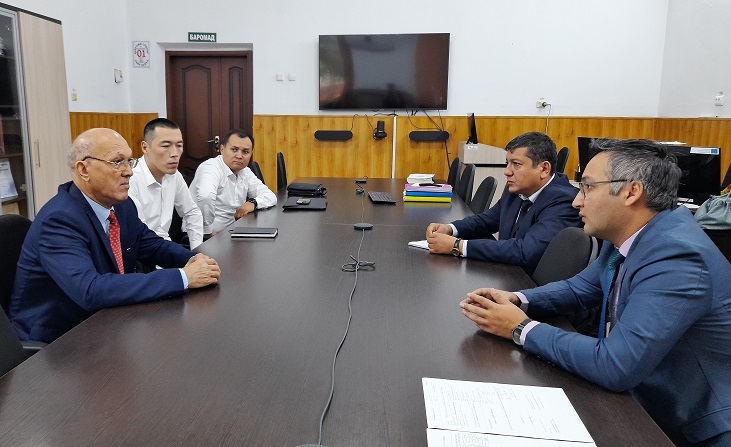
Our institute is pleased to inform you that within the framework of the Erasmus+ program, International Credit Mobility KA 107, we welcomed guests from the Laurea University of Applied Sciences, Finland. International, community and personal development expert – Mr. Conrad Lyaruu and Director of keep partnership – Mr. Ilkka Kurkela met with the Director of the IET TSUC, docent Hoshimzoda H.H. During the conversation, they discussed about future collaboration and Teaching, Learning and Research. Both parties agreed to continue working to promote cooperation.

Head of International Center and Global Engagement of the IETTSUC visited at Mykolas Romeris University

March 6th-10th, 2023, Tajik State University of Commerce (TSUC) Institute of Economy and Trade International Relations Dept. Head Saidqosim Mukhtorov visited Mykolas Romeris University (MRU) and presented a lecture on how to generate ideas for start-ups.
He met with MRU International Office Head Audra Dargytė-Burokienė to discuss developing further cooperation. Both universities signed a Memorandum of Understanding (MOU) in 2018. Mukhtorov is also the Erasmus+ institutional coordinator at his university. “I hope that we will have more mobility with MRU,” he said during a meeting after MRU celebrations on campus marking the Restoration of Independence Day in Lithuania (celebrated March 11th).
He said that in 2019 the two universities worked on a project after which an international conference was held with researchers from MRU invited to give a presentation. During his week-long visit Mukhtorov met with MRU representatives including MRU Faculty of Public Governance and Business Vice-Dean for Studies Prof. Irmantas Rotomskis. Mukhtorov is a senior lecturer at TSUC Technology Dept. of the Institute of Economy and Trade (IET TSUC). His areas of interest include: informational technology, management, entrepreneurship.  He completed his Master’s Degree studies in Business administration and informational technology at Spain’s University of Cantabria.

Report on Cultural Heritage Exchange Workshop

From December 21 to 22, 2022, the China-Tajikistan Tourism Food Culture and Intangible Cultural Heritage Exchange Workshop, sponsored by Shenyang Normal University and co-organized by the Institute of Economy and Trade of Tajik State University of Commerce, was successfully completed through the combination of online and offline. The workshop was funded by the International Chinese Education Innovation Project of the Chinese Foreign Language Exchange and Cooperation Center of the Ministry of Education. Saidqosim Mukhtorov, director of the International Center and Global Engaement of the Institute of Economy and Trade of Tajik State University of Commerce, Shoira Muhitdinova, head of the World Economic Department, Ismailova Mutriba, head of the Foreign Languages Department; Zhang Wei, director of the International Chinese Education Office of our school, and the School of Tourism Management Changmao Jinfeng, Secretary of the Party Committee Zhao Wei, Deputy Director of the International Chinese Education Office Hu Bo, project host Professor Liu Lihua from the School of Tourism Management, teacher Bai Wei, project team members He Jun and Yan Ping, national craftsmen, Shenyang Intangible Cultural Heritage Project Li Xue, the inheritor of “Li’s paper-cutting”, Bao Xiuyan, deputy researcher of Liaoning Ethnic Religion Liaison and Public Opinion Center, Fan Xiaojun, associate professor of the School of Business Administration of Guangdong University of Finance, and more than 50 teachers and students from the two schools participated in the workshop. The workshop was chaired by Li Xiaoyi, head of the Central Asia Cooperation Project of the International Exchange and Cooperation Office.

At the beginning of the workshop, Professor Liu Lihua introduced the construction of the national first-class major and the national higher education characteristic major of tourism management in our school, the modern school conditions of the college, the student-oriented, open and international school-running philosophy and school-running characteristics , as well as the fruitful school-running achievements in personnel training and other aspects. During the two-day workshop, the teachers and students of China and Tajikistan had full sharing and in-depth exchanges on the characteristic tourism food culture and intangible cultural heritage of the two countries under the background of the rapid development of international tourism. Teacher Bai Wei from the School of Tourism Management of our school shared the representative cuisines of Lu, Sichuan, Zhejiang, Anhui and other Chinese cuisines, famous tourist food cities and landscapes, Kunqu opera, Chinese calligraphy, traditional Chinese tea-making skills and related customs, Liang Zhu, Jingdezhen handmade porcelain Intangible cultural heritage such as skills and related characteristic tourism culture such as Humble Administrator’s Garden and West Lake. Teacher Li Xue introduced Li’s paper-cutting intangible cultural heritage project and representative works that have been passed down for hundreds of years, and carried out online teaching using traditional paper-cutting techniques, and made a paper-cutting vase. Cui Tiantian and Wu Haoran, students majoring in tourism management, combined world cultural heritage The Shenyang Forbidden City and the century-old middle street shared the traditional food of Chinese time-honored brands such as Laobian dumplings, as well as Shenyang’s characteristic intangible cultural heritage tourism culture such as Errenzhuan, shadow puppetry, and Manchu costumes.

Saidqosim Mukhtorov, director of the Tajikistan International Center and Global Engagement, and Ismailova Mutriba, head of the Foreign Languages Department, shared the characteristics of Tajik tourism culture, traditional specialties such as pilaf and pouches, as well as embroidery, shashmuqam, and farak and other intangible cultural heritage, showing local festivals, summer camps and other tourism activities, allowing students to experience the ancient Central Asian urban civilization and strong exotic customs at close range. In the free exchange session, teachers and students from China and Tajikistan conducted extensive exchanges and heated discussions in various fields around the Chinese New Year, the representativeness of Chinese cuisine, Shenyang Forbidden City tourism, Tajik festivals, food production and other tourism cultures.

This event not only enhanced the exchange and mutual learning between Chinese and foreign cultures, but also built a platform for friendly dialogue between Chinese and foreign teachers and students. At the same time, it will also further promote the development of international Chinese education in our school and expand the relationship between our school and universities in countries along the “Belt and Road”. Pragmatic cooperation has played a positive role in improving the international vision of teachers and students and improving the level of international education.

Community College Initiative (CCI) Program

The Community College Initiative (CCI) Program seeks to foster mutual understanding between the citizens of the United States and the citizens of participating CCI countries. Since the program’s inception in 2007, more than 3,500 participants from 24 countries have received scholarships for study at community colleges throughout the United States. The CCI Program is a program of the U.S. Department of State.

The CCI Program encourages a holistic learning and exchange experience and focuses on five program pillars: academics, cultural exchange, service learning, internships, and leadership and community impact project. All five pillars of the CCI Program are of equal importance.

Click to dowload the application form.

Click to get forwarded to the link of the announcement.

Applications should be submitted NO LATER THAN December 23, 2022, at 17:00 (Dushanbe time zone) to: FulbrightTajikistan@state.gov

We wish you the best of luck!


IGNORE THE PROBLEM DOES NOT MEAN TO SOLVE IT.

Based on the article by Abdullo Rakhnamo , an expert on international issues on the topic “Tajik-Kyrgyz border conflicts. Who is the real aggressor?” I come to the conclusion that the author, based on historical documents, has formed a complete understanding of the essence of the position of the Tajik side on the current issue, in particular, outlined the essence and legal foundations of the position of the Republic of Tajikistan in the border dispute with the Kyrgyz Republic.

Explaining the reasons for the border dispute between Tajikistan and Kyrgyzstan, it should be noted that, according to official documents defining the borders, today the Kyrgyz Republic has 211,000 hectares of land plots of the legal territory of the Republic of Tajikistan at the disposal of the Kyrgyz Republic. Such data were announced on September 23, 2022 in a statement by the Minister of Foreign Affairs of the Republic of Tajikistan at the UN General Assembly. According to official data, these lands are referred to as “disputed areas”, occupying 84,000 hectares of land in the Bobojon Gafurov territory. Gafurov district, mainly in the jamoat Khistevarz , 66,000 ha – Andarak forest zone, in Kuhistoni Mastchoh region , 61,000 ha, in the territory of Isfara, in jamoat Surkh , Lakkon , Chilgazi , Shahrak, Chorkuh and Vorukh. And also, some other small lots in Jabbor Rasulov and Spitamen districts. The practical need for Tajikistan’s persistence is based on the fact that 211,000 hectares of “disputed land” in the use of Kyrgyzstan have been leased over the past 90 years through acts such as the interaction of ordinary citizens or local officials. That is, these lands were assigned to the Kyrgyz at different levels by unauthorized individuals and legal entities.

One of the “arguments” of the Kyrgyz side in this dispute are some administrative and local acts on the use of part of the land. The Kyrgyz side does not publicly provide any evidence of its correctness. However, he insists that Vorukh is an enclave, like a spell. It’s convenient not to go into details, but simply write: Legally, Vorukh belongs to Tajikistan, however, due to the redrawing of borders in the past, it remained an enclave within Kyrgyzstan.”

      But the advantage of the position of Tajikistan is that none of these documents, which were signed between individuals, farms, districts and land use departments, did not go through the necessary legal procedures both in the Soviet period and after gaining state independence. In negotiations on the border with the Kyrgyz Republic, the Tajik side relies solely on documents that have passed all stages of interstate procedures and are recognized as defining the border between the two countries. The documents of 1924-1927, 1932 and 1936 are the only package of documents in which the state borders between Tajikistan and Kyrgyzstan are officially confirmed. These documents are the only ones that have fully passed all the established constitutional intra-republican and state procedures for determining the boundaries between the republics within the USSR and have passed legal formalities.

From historical data, we know that when the union republics were formed as part of the USSR, in the border regions between Tajikistan and Kyrgyzstan, Tajiks lived on the side of our country, and on the side of Kyrgyzstan, there were mainly pastures and mountains. There were almost no settlements near the border areas. Then, with the growth of the population, settlements appeared near our borders. They even mastered part of our territory near the village of Khistevarz (Kostakoz) and now almost a seventh of the population of Khistevarz is Kyrgyz. And the village of Vorukh ended up in an enclave, i.e. they do not have direct roads to Tajikistan and pass part of the road through the territory of Kyrgyzstan. An artificial barrier has been created for them. They do not have the right to use the pasture around their village. The Kyrgyz side does not publicly provide any evidence of its correctness . However, he insists that Vorukh is an enclave, like a spell. It’s convenient not to go into details, but simply write : Legally, Vorukh belongs to Tajikistan, however, due to the redrawing of borders in the past, it remained an enclave within Kyrgyzstan.”

It should be noted that now from the side of the Kyrgyz media there is a real information war in which there is not a drop of truth and they shout to the whole world that Tajikistan attacked the Kyrgyz people. Firmly condemning the undiplomatic and groundless speech of the President of Kyrgyzstan at the General Debate of the 77th UN General Assembly , it is important to note that in his speech Sadir Japarov spoke about the border conflicts and single-handedly blames all the incidents on Tajikistan. At the same time, they forget how they violated the agreement on not using drones at the border and hit the mosque with the Turkish Bayraktar drone during the evening prayer, in which believers prayed for peace, resulting in the death of 20 people. Let’s not forget that on January 27, 2022 at about 18:40 at the crossroads of the villages of Zarafshoni and Somoniyon of the rural jamoat Chorkuh of the city of Isfara between the border guards of Tajikistan and Kyrgyzstan there was an armed conflict. As a result of the border conflict on the Tajik side, 10 people were injured, including 6 servicemen and four civilians. Previously, they also attacked our country at the behest of their Western curators, vilely, suddenly, treacherously. Their most vile act is a shell strike on an ambulance in which the family was, as a result of which a 5-year-old boy, her sister and a woman who was 8 months pregnant, who was expecting a child , were burned alive. At the same time, it should be noted that Kyrgyzstan continues to ignore key agreements, primarily on the ban on the use of firearms by military personnel and their strict adherence to the line of conduct of border guards. We remind you of the wise proverb: Ignoring breeds despair. And despair breeds violence. Ignoring a problem is not the same as solving it.

Tajikistan at all levels and stages declares its commitment to a peaceful solution to the problem. The history of our country convinces us that all-round fraternal cooperation and mutual assistance of nations and nationalities that have embarked on the path of development in our multinational state is one of the driving forces for the development of society, in interethnic relations it is the basis of unity in the struggle for peace, which is based on a strong moral basis. Without such a foundation, a stable and sustainable order is unthinkable in the country, which alone gives people real confidence in their future.

F. MAMAJANOV,

Member of the Department of Science and

Innovations

S. MAKSUDOVA,

Senior lecture of the Department of Foreign Languages  

ERASMUSDAYS here at IETTSUC!

The International Center and Global Engagement of IET TSUC conducted Erasmusdays.
In the beginning of the meeting the head of ICGE – Saidqosim Mukhtorov had an active discussion with students about the Erasmus+ prospective and the expectations. It is very pleasant that there are enormous number of students who admire and would like to participate in the Erasmus+ International Credit Mobility.
After the discussion section Saidqosim Saidosimovich has announced the opportunities given by the project and calls for partner universities. Now application procedures are open to LAUREA University of Applied sciences, Varna University of Management, University of Seville and University of Osijek. Also he pointed out that soon there will announcements about call for our Spanish partner universities – University of Cantabria and University of Cordoba in the coming weeks.
Just a reminder to those who would like to participate: both teachers and students are welcome to take part in the application process. The deadlines for each call may vary, thus you can visit our ICGE web-page (iro.iet.tj) and discover all the necessary information.

We continue our mobility under UNICAC project

The second day of the mobility under UNICAC project started with the presentation about the activity of the International Center and Global Engagement of IET by the Head of ICGE – Saidqosim Saidosimovich. He presented information about students and staff mobility in the framework of the several programs like UNICAC, Erasmus+ ICM and etc. It is important to note that the curve of mobility performed by IET is growing vertically and in 2022 there has been organized more than 30 mobilities, this number is expected to be increased by the end of the year.
The mobility staff of TUIT were excited and liked the activity of the ICGE very much. Straight after it, our guests expressed a wish to visit IET Acceleration of Digital Business center and there was organized a tour. According to the agenda there was a planned lecture about telecommunications by Professor Ahmad Yusupov from TUIT. Professor has told about the history of telecommunications, its perspectives and implementation. The lecture was conducted very interesting and students were very active in discussion.

IET TSUC in Khujand welcomes partners from Tashkent University of Information Technologies

In the framework of UNICAC project Institute of Economy and Trade of TSUC in Khujand welcomes partners from Tashkent University of Information Technologies (TUIT). Staff of TUIT will have mobility actions under UNICAC W.P. 3.7.2. PILOT TESTING. According to mobility agenda our guests were welcomed by the authorities of the IET TSUC.
After, there was organized a roundtable at the International Center and Global Engagement (ICGE) office with Dalerjon Mirpochoev – the Deputy Director on Research and International Affairs and Saidqosim Mukhtorov – the Head of the ICGE. The main topic of discussion was about strengthening partnership between the HEIs, which is one of the important goals in the framework of UNICAC. Also Saidqosim Saidosimovich conducted a presentation about IET TSUC to our guests from Uzbekistan. Follow us to be aware about other sessions of the mobility.

The delegation of the CEES project continues to work at IET TSUC

Institute of Economy and Trade of TSUC in Khujand is welcoming guests from the USA. Our institute is pleased to inform you that in the framework of UniCEN developed by the American Council for Higher Education, we are having guests from Old Dominion University (Norfolk, Virginia). First of all, Mr. Marty Kaszubowski and Mrs. Sharon Scannell were introduced about the Tajik culture, institute, and the process of internationalization being realized by the Head of ICGE – Saidqosim Saidosimovich.

On the second day under the project CEES (Collaboration for Enhanced Entrepreneurship Support), our honorable guests had a meeting with the students and there was a discussion about the main aspects should be known by business owners and start-uppers. It should be noted that students were actively asking questions about the businesses they have or aiming to build during the conversation. We hope that the suggestions and tips given by our American friends will be fruitfully used by our students.

Straight after the conversation with students in the ICGE room was organized a roundtable with the presence of Mr. Marty Kaszubowski and Mrs. Sharon Scannell and the mentors of the World Economy Department.  There was a discourse about the principles and criteria of being an investor, which is gaining momentum in our society. We were pleased to know Mr. Marty to be a practical investor, thus it was very interesting to listen his experiences. During the discussion mostly the investment climate in Tajikistan, perspectives, and the cons of investment were the main theme of the conversation.